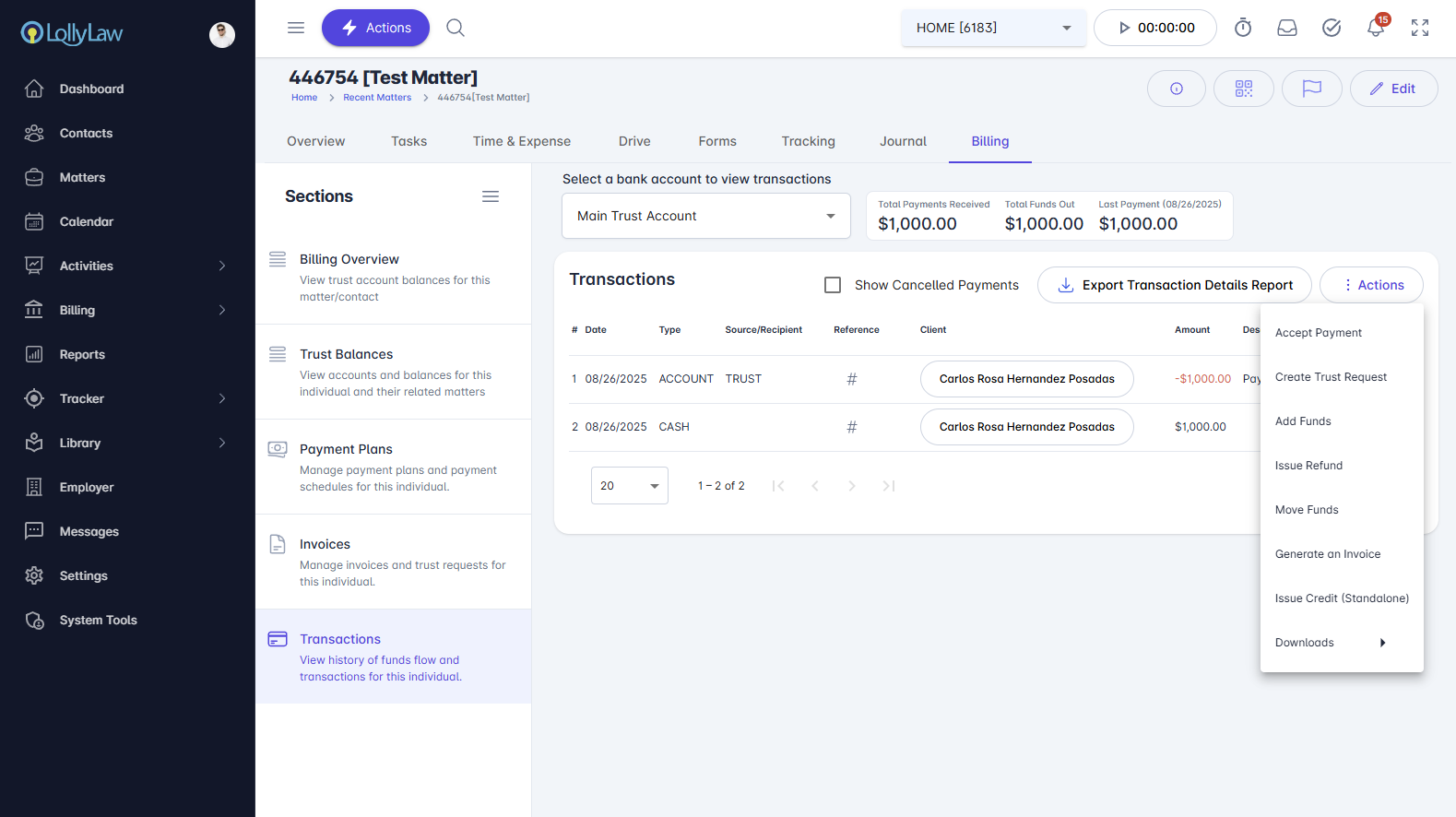

Overview of Billing Sections
Each Matter in LollyLaw includes a dedicated Billing page designed to give your team full visibility and control over all financial activity related to that case.
This page centralizes key billing functions—allowing you to quickly review balances, manage payments, and take action without navigating across multiple areas of the system.
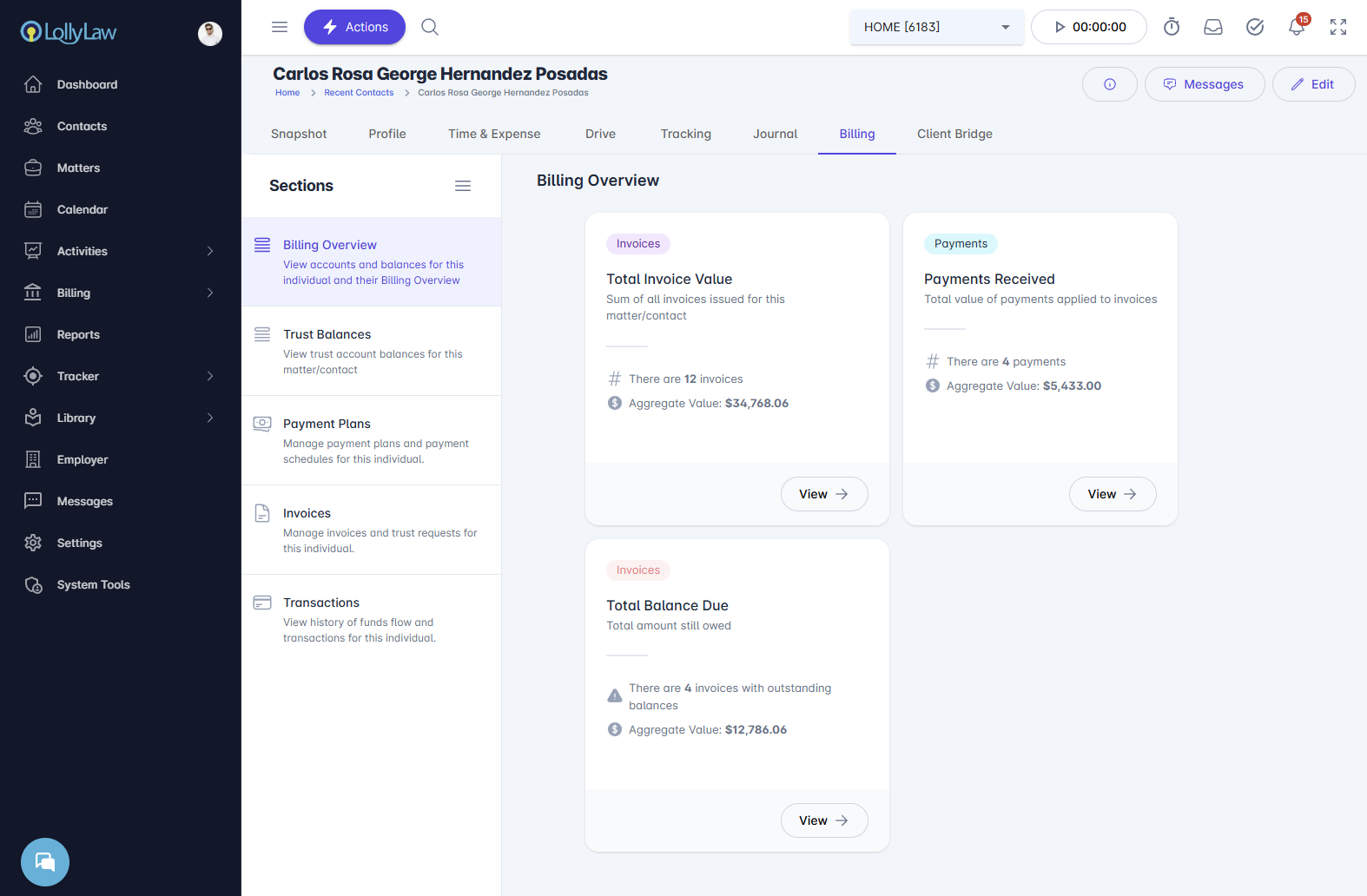
Billing Overview
The Billing Overview section provides a high-level snapshot of the matter’s financial status.
At a glance, users can quickly understand:
Total billed amounts
Payments received
Remaining balance due
Each summary card includes a quick-access link, allowing you to jump directly to the relevant section to take action or review details.
Trust Balances
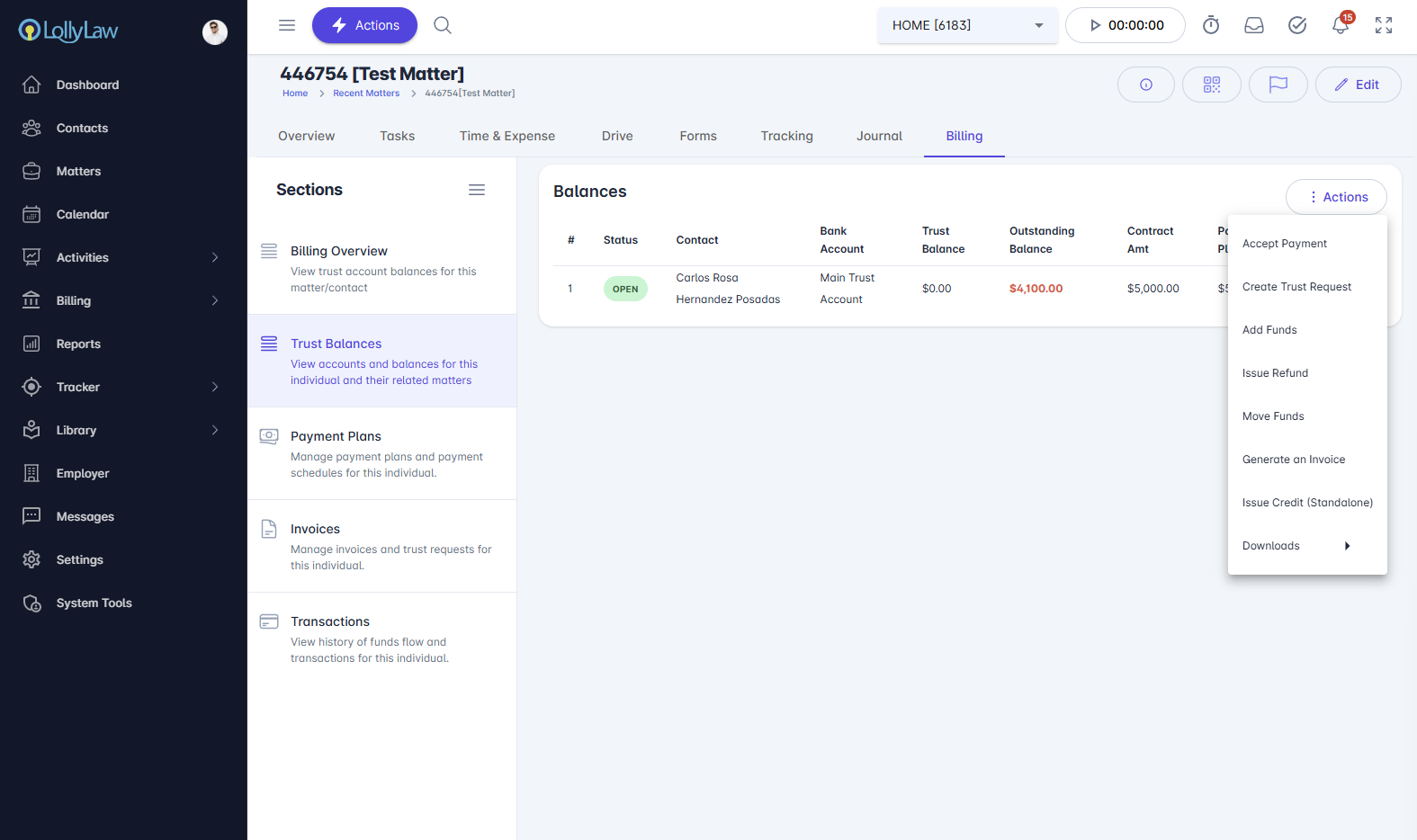
The Trust Balances section allows your team to manage client trust funds efficiently.
From here, users can:
Review available trust balances
Create trust requests
Record or accept payments into trust
This ensures your firm maintains proper handling and visibility of client-held funds.
Payment Plans
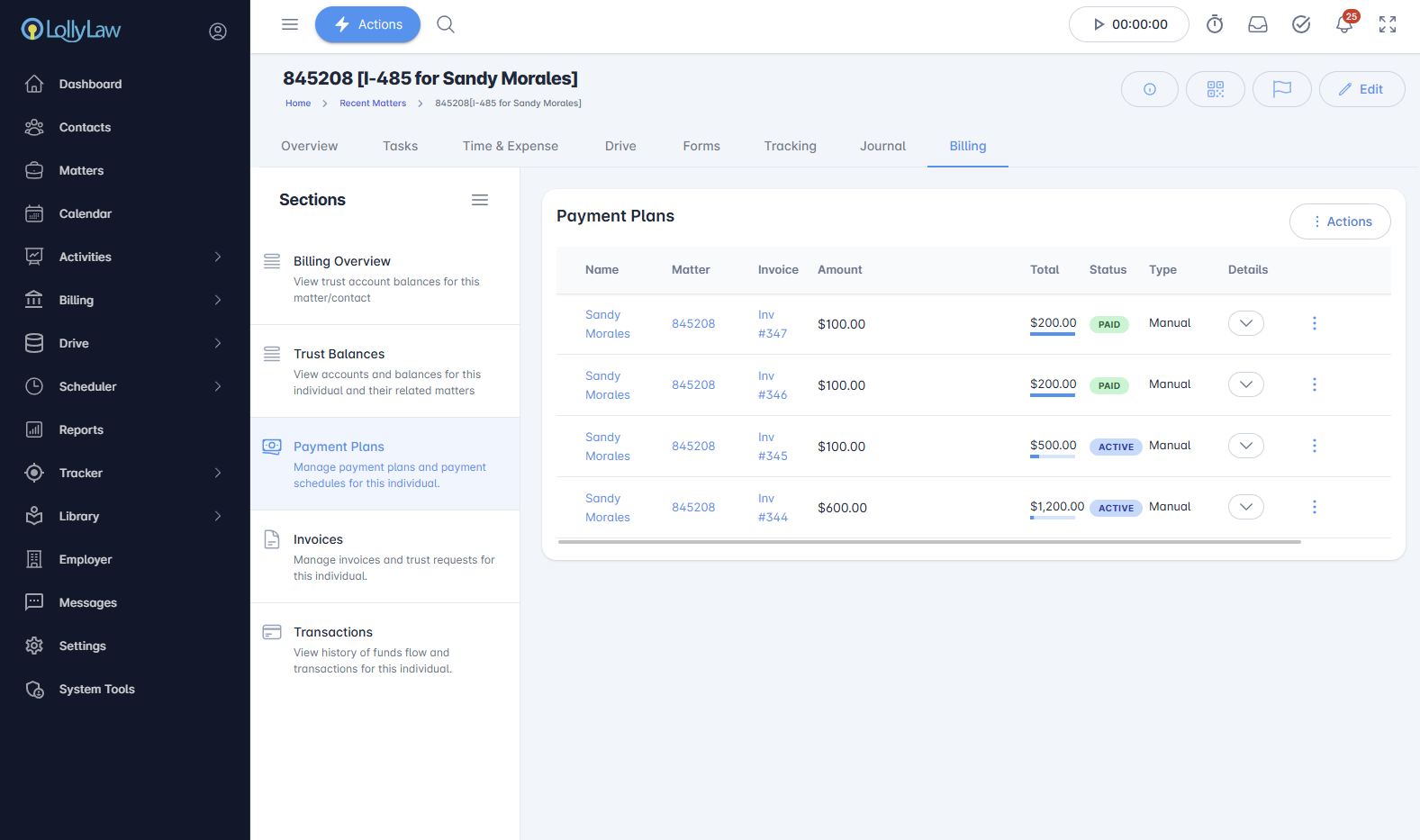
The Payment Plans section provides tools to manage structured payments for invoices.
Note: This feature requires LollyPayments to be enabled and configured.
Users can:
View active and completed payment plans
Review scheduled payments
Cancel entire plans or individual scheduled payments
This section helps your firm offer flexible payment options while maintaining control and transparency.
Invoices
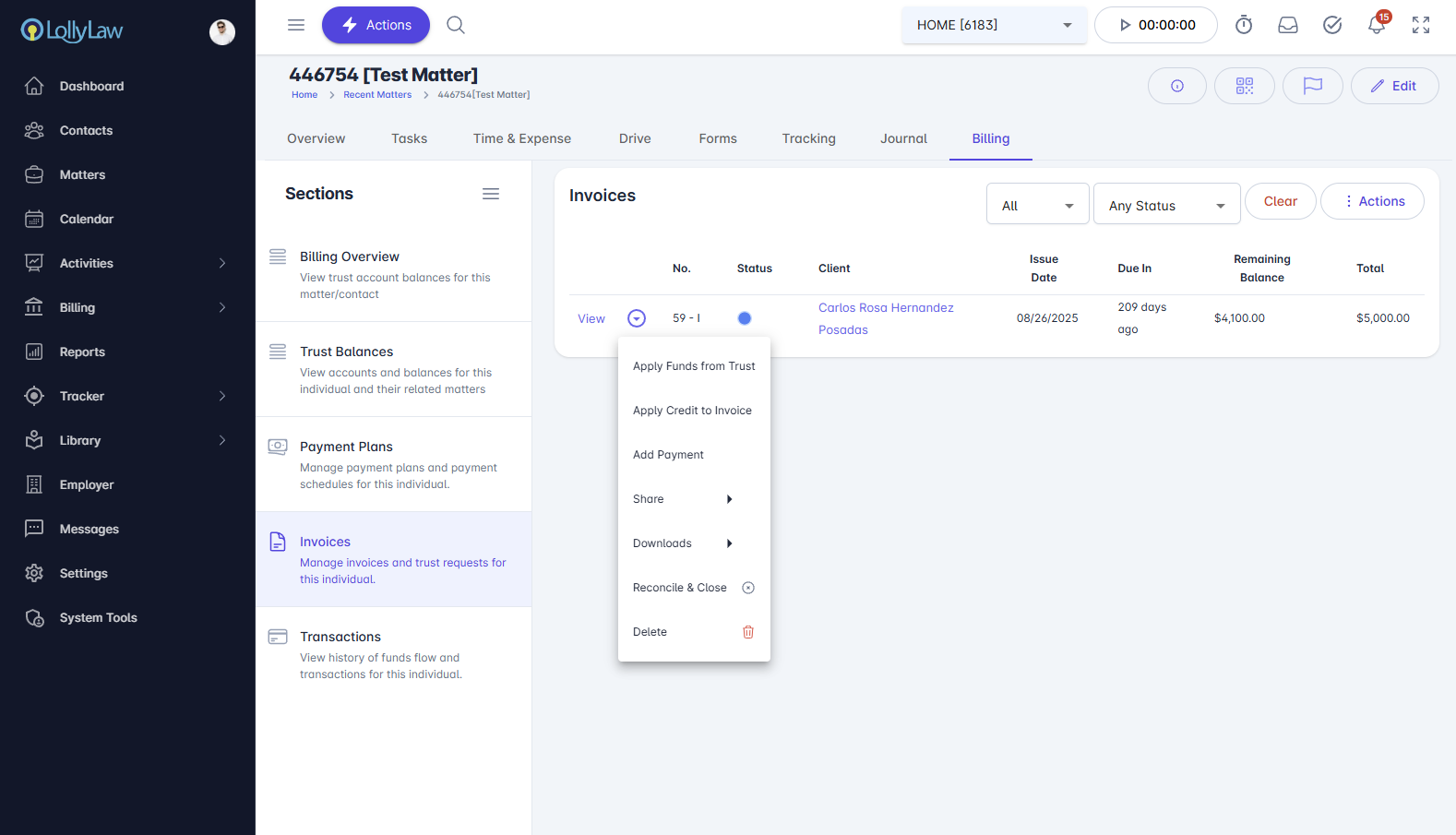
The Invoices section is where users can view and manage all invoices and trust requests associated with the matter.
From this area, users can:
Open and review invoice details
Send or share invoices with clients
Accept payments
This serves as the primary hub for managing billing documents and client-facing payment requests.
Transactions
The Transactions section provides a detailed view of all financial activity for the matter.
Users can:
Review individual transactions
Issue refunds or credits
Record or accept payments
Generate new invoices
This section is ideal for auditing activity and taking direct financial actions at the transaction level.